38. REJECTING THE HERITAGE
ONE of the enduring objects of education has been to acquaint each generation with the best minds,thoughts, achievements and experiences of the past generations. These are formally recorded in books of history,portrayed in literature, and captured in the religious tradition and philosophical reflection. They are preserved and presented in the performing arts like dance, music, drama.They thus reach all sections of society. This represents a continuous, cumulative tradition , each generation adding its own contribution. The ancients took great care and pains to preserve and pass them on even in the absence of widespread literacy, written records, and formal libraries. Such was the importance attached to the preservation of heritage.


It is only societies which relied on oral transmission with a definite method that have succeeded in preserving their past chronicles. Homer's Iliad comes from such oral tradition. The old language is often not understood, and old practices have been discontinued. The Greeks today do not continue their classical tradition, or practise their own philosophy! Their literature lives!
It is Hindus alone who have preserved both their religious and secular literary traditions in tact all these millennia- in spite of the waves of invasion. Ironically, it is in the modern age that these are threatened, by absence of true shraddha, excessive reliance on print, digital, and visual media, absence of sources of patronage, and the irreverent intrusion of empty academics.But even today there are traditional scholars who preserve the oral tradition, though in a shrunken form.

Sengalipuram Anantarama Dikshitar-
famous exponent of Ramayana, Bhagavatam, Narayaneeyam, all extempore
Ancient Secular States
Religion served as the focal point of the total heritage of societies.
Ancient Greece granted freedom of worship and belief to individuals, so long as the nation's ancient Gods were publicly honoured. This tradition was continued by the Romans, so that many cults flourished. Edward Gibbon writing on the fall of the Roman Empire recorded:
The various modes of worship, which prevailed in the Roman world, were all considered by the people, as equally true; by the philosopher, as equally false; and by the magistrate, as equally useful. And thus toleration produced not only mutual indulgence, but even religious concord.
Thus in those ancient days, the State allowed multiple faiths. There were no battles on theological grounds. This truly amounted to a "secular" state. One can imagine the kinds of cultural currents that flowed.
Separation of Church and State
This changed with the ascendancy of Christianity as the state religion in the 4th century AD.Religious intolerance began with the Christians. Other faiths were ruthlessly, often brutally, suppressed. Wherever Christians went, they destroyed the native religions, as in South America. This continued till the 18th century when with the rise of the Enlightenment movement in Europe there was first the separation of Church and State, when religion lost state protection and patronage. This is best exemplified in the First Amendment to the American Constitution.[1791]. The 'secular ' or neutral state was born. Muslims have not followed this trend.
With the rise of science, people came to devalue religion itself and its prescriptions and practices. Religion continues no doubt in some form, but it has ceased to be the motive for living (except in the case of fundamentalists). People do not now live for God. Society as a whole has become secular . Religion has lost its role as the guardian of heritage or as guide to conduct. We go by civil law.
First, religion was hit. Now history and literature are being undermined.
Delink with heritage:
History and Literature
History as formally taught has usually been dull and uninspiring. And when the teacher is as dull and unenthusiastic. A good and inspiring teacher can enliven the subject, any subject. But even more than that, somethings are best learned in an informal atmosphere, in accounts given in informal, playful ways.
This is what good literature does. One can learn about English social conditions during the early industrial revolution from text books. We can also learn them from the novels of Charles Dickens. Which is more interesting for the general reader?
Study v Education
Speaking to some youngsters who have just finished their +12 schooling, I found that neither history nor literature interested them! "Uncle, we have our entrance exams- so many of them; the portions to study are so heavy; the model papers to solve are so many. We have been preparing for the last three years. Who wants history or literature?"
I don't blame the poor children. The competitive pressure is so much. In our system, there are not many choices for career, or job, really.Most of these boys and girls come from middle class backgrounds, and a regular job is their ideal and necessity.. All their study is linked to the job ultimately. And their education stops with a job! I realised the true import of what G.K.Chesterton said long ago: Let not study stand in the way of your education!
Our system has limited education to schooling ( and college) and a distaste is created for further learning! Our vast literature in the various languages is perceived to be not important, because they are not relevant to a job or career., or even higher studies. People do not look up to literature like poetry as a source of learning or relaxation. The very word "learning" has lost its conventional meaning and significance. We have scholars and academics, but no more learned men!
Heroes no more!
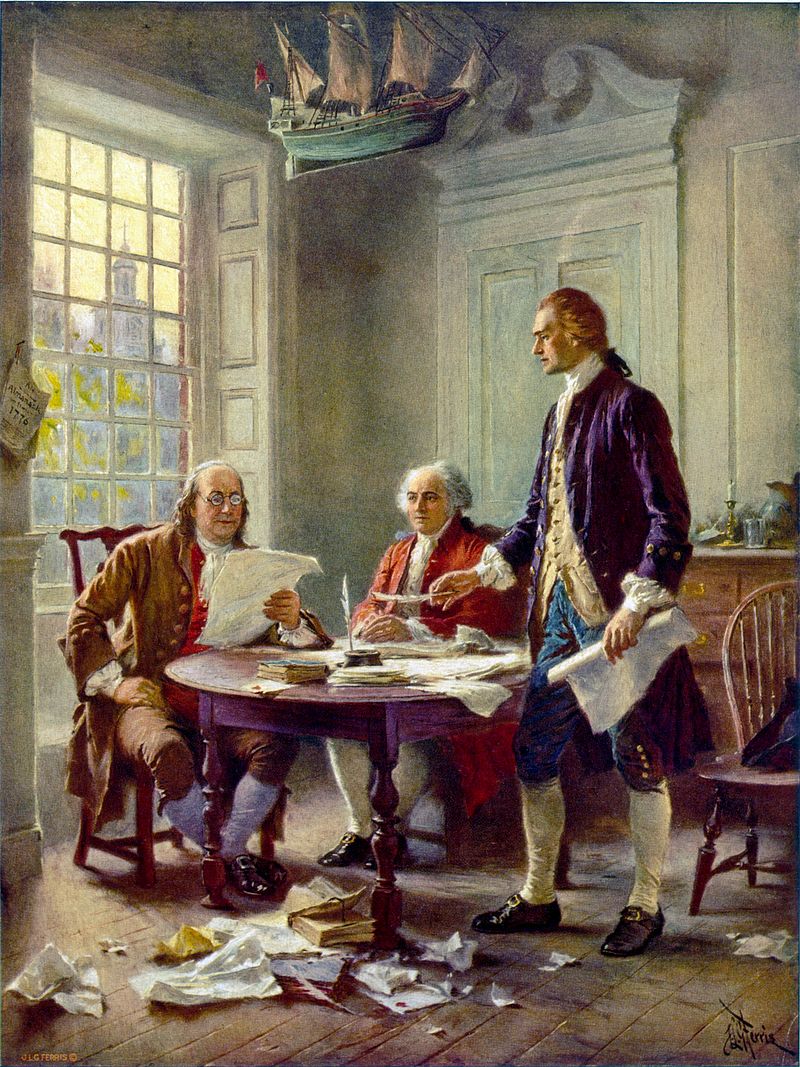
I did not find this surprising. All over the world, there is a tendency on the part of entrenched academics to rubbish the past. On the American campuses, they are busy re-assessing their founding fathers, and finding that they are not heroes, after all! Their civilization is not so great, for it is the creation of the Caucasian White Male or the Protestant Anglo-Saxon concoction! Americans are not great! This is all driven by some political agenda.
Some American English teachers do not like to teach Shakespeare; they ask why "one English guy" should be given so much importance, when there is so much other interesting material! And even teenagers in England are asking why they should read Shakespeare, when his language is no more spoken or understood!
The West has not been noble in some of the things they did. But it does not mean they were not great in some respects. We may not agree with many things they did- but it is now, after so many centuries! In their time, they did what they they thought was right or great! They did what no one else did, for whatever reason. Who prevented the Chinese or the Indians from going round the world and discovering new places? It does not make sense to rubbish the past of an entire civilization.
As a victim of British colonialism, I can surely blame them for many things. But then, who allowed them to colonise us? Why did we not resist them? We were witless, and blame them for their guile! The blame is not all on them! This is exactly what Mahatma Gandhi said in 1909: the British did not conquer India, Indians lost their swaraj! In fact we have lost it more after they left!
3 Gs - Then and now !
The big explorers who went out to discover the world are said to have been motivated by three Gs : God, Gold, and Glory. One went to America, another came to India. Both these guys changed the history of the world.They imposed their religion on native peoples; they plundered the gold; and they sought name for themselves. This is a historical event: iti ha asa, as we say- " thus indeed it was". Why should we call them villains now? We do not like them, but have we learnt any lessons? We have allowed global capitalism to rule us! Greed is the new God, Gold and Glory are still there! India is still plundered in the name of globalization! Our own people went and signed those agreements! This is because we did not learn or remember our history! Why blame others? Globalization is the biggest G which has swallowed all other Gs!
Is Shakespeare still relevant?

Why should we study Shakespeare? He is no kith or kin.He was an Englishman- representative of a race who ruled us. He did not write our language. He wrote strange stories. His language is at times obscene/vulgar, He wrote for illiterate audiences.
All this is true. But all this is like the skin of our jack fruit. Remove it , and you get one of the sweetest and most nourishing tropical fruits. Shakespeare was English by birth, but he was universal or cosmic by sentiment. He wrote about matters which are universally valid. He gave many expressions which have become part of the linguistic heritage. He wrote so much that amuse us, expressed so much lofty philosophy which can edify us. How many have been there in the world like him?
[As for the allegation that Shakespeare wrote for illiterate audiences, let us remember that our own Panchatantra is supposed to have been written in the form of animal fables by Vishnu Sharma to educate the foolish children of a prince. That has not prevented us from enjoying the work, and drawing lessons! This is perhaps the one work from India that has been translated into many languages and entered the lore of many countries from ancient days!]
Dr. Samuel Johnson wrote in his preface to The Plays of Shakespeare (1765),:
“His characters … are the genuine progeny of common humanity, such as the world will always supply, and observation will always find.”
The 400 years since his death have only added value to his words. Ben Jonson, contemporary poet and writer noted that
Shakespeare was ‘not of an age, but for all time.’This is the mark of a true master: his works never get dated. Every generation and age can find new meaning and relevance in his works.
If English youngsters feel they need not study Shakespeare, they are English only by skin . Something vital is missing in their psyche.

Changing values-sinister designs
This is the result of the maddening pace of modern life, the changes in our lifestyle which devalues genuine leisure and promotes gadget culture, the hard conditions of living which do not allow us the time or inclination to devote to a great work of art. We hardly take time to pause and reflect. It is due to the change in our values. And it is also due to the sinister international forces which decry national cultures and exalt an amorphous pluralism. First went the open link with religion. Now the link with one's own linguistic and literary heritage , which is an essential part of culture, is sought to be cut!
It is said by some that Shakespeare's plays were meant to be performed, that his words were meant to be heard and enjoyed and not laboriously studied, and that what was meant for illiterate English audiences cannot be enjoyed by students drawn from different ethnic and cultural backgrounds and languages. A little thinking will show what fantastic nonsense this argument is! All these boys and girls, from different language groups and ethnic and cultural backgrounds learn English for 10- 12 years, reach some level of proficiency and come to England for further study and work. And only when it comes to Shakespeare they are aware of their different background! If they are so fond of their background, why leave their countries at all? Unfortunately, the rulers in the UK have lost their head too. They have forgotten what it takes to be an Englishman.
The US- not a civilization as yet!
The situation in the US is somewhat different. The US is not yet a true civilization. It is not yet a full country. It has been a 'melting pot'. The Americans are not one people. It is just 400 years old and has no culture of its own, except money making, and military adventure, which resulted from the two world wars.Their economy rolls on the military-industrial complex. It has no genuinely original achievement except its Constitution and the Atom Bomb. The UK is mature, older civilization, has been the cradle of the modern world, is still the mother of parliaments. And it is the home of the genuinely international language, English. And what is English without Shakespeare? Are the Englishmen who devalue Shakespeare in their senses?

Shakespeare is not for stories!
Cover of a Harper Perennial Book-2012
Shakespeare, or any classical literature for that matter, is not studied for the stories alone. It is not studied for mere pleasure or intellectual pride. It is studied in the process of growing up. The language is not familiar today, but therein lies its beauty. It takes some effort to master it, but with the Internet and books like No Fear Shakespeare, we can easily study the works . And the pleasure comes when we start reflecting on the stunning passages or usages, often induced by situations we face in real life, not necessarily what the characters faced in the plays. There is art, poetry, philosophy, fun in his works.Only, we must be suitably equipped. Appreciation of any genuine art takes deliberate effort and time.And some mentoring. And who knows, study of Shakespeare may in time make us wise! (may be, in spite of ourselves!)
I started studying Shakespeare in 1959,[ only two plays were studied in college as part of the syllabus; others I read on my own.] It took time, because we had few guides and detailed notes.But we had excellent books like A.C.Bradley's. When I started marking the notable expressions and passages, I crossed two thousand! What range of ideas and expression! If an educated person says he has no time or mind for Shakespeare, I think he is just a buffalo in human shape!
Shakespeare-the Universal Man
Each race produces its representative man. Shakespeare is the foremost Englishman. In his works he reveals himself as the Universal Man, if ever there can be one. He is not dead. He cannot die. As Emerson observed:
Shakspeare knew that tradition supplies a better fable than any invention can. If he lost any credit of design, he augmented his resources; and, at that day, our petulant demand for originality was not so much pressed. There was no literature for the million. The universal reading, the cheap press, were unknown. A great poet who appears in illiterate times, absorbs into his sphere all the light which is any where radiating. Every intellectual jewel, every flower of sentiment it is his fine office to bring to his people; and he comes to value his memory equally with his invention
Shakspeare is as much out of the category of eminent authors, as he is out of the crowd. He is inconceivably wise; the others, conceivably. A good reader can, in a sort, nestle into Plato’s brain and think from thence; but not into Shakspeare’s. We are still out of doors. For executive faculty, for creation, Shakspeare is unique. No man can imagine it better. He was the farthest reach of subtlety compatible with an individual self,—the subtilest of authors, and only just within the possibility of authorship.
Do we realise what we lose when we deny ourselves a dip into Shakespeare? We lose touch with an entire tradition of which he gave supremely varied and refined expression. We lose touch with a part of total human experience. We lose touch with a part of ourselves.
Shakespeare- just an example
Shakespeare is just one example to show how our heritage is getting dumped. As educated Indians, we are more familiar with Shakespeare than with Kalidasa or Kamban or the other great regional poets. They also wrote in tongues which are today not understood, without translation and annotation. Thanks to Macaulay's education, we have lost touch with them: there is not even a pretense of getting to study their works.They appear so remote! To that extent, our heritage is already as good as lost.
[ One aspect of the Macaulay scheme is the replacement of our own languages and subjects by English and new subjects; the second aspect is the linking of formal school education with jobs. It is this system that prevails today. Studying the old literature in the Indian languages won't get you a job today! Besides, they are highly didactic and do not appeal to the younger generation.]
It is an irony that while Sanskrit is not read and understood by many,unless they learn it deliberately, most Indians cannot also read and understand the ancient works in their own regional tongues, which are spoken, in spite of their schooling, unless they are translated and annotated!
Look at the ironical situation. Shakespeare is supposed to have written for illiterate audiences, but they understood his philosophy and poetry. Today, our highly literate and 'educated' youngsters cannot follow the works in their own language!
The tendency to disregard and discredit one's own cultural heritage is a growing malady today, in the amorphous multiculturalism that is engulfing us. This is reinforced by commercial globalism.
Intentional misinterpretation
There is also the tendency to interpret ancient works in the light of today's opinions and theories, giving the words a meaning which they did not have, overlooking that secular works reflect the spirit of the times. The old works influenced our character and conduct. Their facts might be wrong according to today's science; but their beliefs made for better beings. Today we may know that the earth is not flat; that it is not the centre of the universe; but has this knowledge made us better human beings? Or has it made the earth a better place to live? Scientific theories are like passing clouds; they do not precipitate rain. They do not constitute a tradition that can guide successive generations. The so called scientific culture is hardly two centuries old, but it is already making the world unfit for living.
Living tradition grows
A living cultural tradition is a cumulative force; the scientific culture is ever changing theoretical fancy, that is only sustained by the fundamentalists occupying university chairs. Tradition does not stop with the present. We are also adding to it, we are continuing it- on different lines. A living tradition is ever evolving. For that we don't have to reject the whole heritage or dishonour the past. To reject the heritage is to commit cultural suicide.
Life every man holds dear; but the dear man holds honour far more precious-dear than life.Troilus and Cressida
Shakespeare