Showing posts with label Einstein. Show all posts

Thursday, 9 November 2017

35. MAN: LONELY ISLAND ?


35. MAN: LONELY ISLAND ?

THIS world is a web of connections, inter-relatedness. No life form flourishes or thrives or even survives in isolation. There is something in nature which connects or unifies even apparently contradictory things in unseen ways. The modern science of ecology is just discovering some hidden relationships. 


Among modern scientists Fritjof Capra has written about it. In his book "The Web of Life", he sets forth

" a new scientific language to describe interrelationships and interdependence of psychological, biological, physical, social, and cultural phenomena--the "web of life." 

Book cover shown here for educational purpose.
Published by Anchor, 1997.
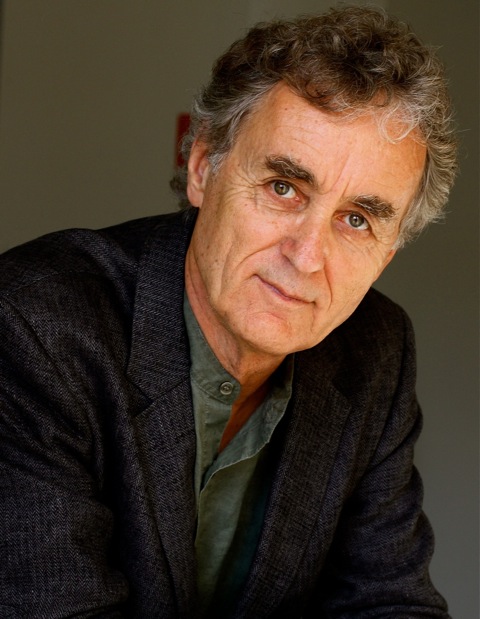


However, this is not so much an entirely  new insight,  as recovery of the old wisdom, of which modern man has lost sight. In the name of analytical science, man dissected and disconnected everything. It takes new science to see the connections so sundered. It takes a philosopher to see their true significance. Luckily for us, Capra is both scientist and philosopher. 
Photo of Fritjof Capra: By Zenobia Barlow
CC BY-SA 3.0 Creativecommons via Wikimedia Commons.


Man: part of Nature


All pre-Christian religions regarded man as part of the larger Nature. They did not make man its master, but guardian or trustee, because he was endowed with superior intelligence. They did not regard Nature as made for man's convenience or pleasure. Man was expected to live obeying Nature's laws, not to bend them to serve his immediate purpose or pleasure. The world was like a transit camp for man, on his way towards his permanent home.

Christianity changed this, saying the world was made by God for man's purposes. It asked man to "subdue " the earth. After nearly 15 centuries of this shibboleth, Enlightenment and Scientific revolution took over. They obscured the old wisdom even more, and toppled old ideas and approaches.They refused to recognize any purpose or concede anything sacred in Nature. Economic, Industrial and commercial interests immediately took advantage of the situation to engineer a new economic system. Exploitation of Nature was its core element. The rise of Western imperialism and colonialism spread the ideas and arrangements worldwide, so that it now reigns as default. Exploitation has turned destruction.

Threefold Connection:

The ancient wisdom recognised a threefold connection for man:
- his innate connection with Nature and all living systems
- his connection with the human society, though it was conceived as being structured and hierarchical, with fixed relations and mutual obligations
- his connection with a Higher Power which ordained the Universe and its natural and social systems.
These were the three pillars on which the structure of life in the world rested. They were three strands of one Great Truth.

The rise of science and the resultant industrial  and commercial culture obscured this ancient insight and the discipline it enforced. It made life wholly materialistic and secular.

The first to react to this were the great poets of the Romantic movement, and the great social critics like Carlyle , Matthew Arnold and John Ruskin.

The immediate result of the rise of science was a brutal assault on nature. It disconnected man from his roots in nature, made him an economic animal, seeking bodily comfort and satisfaction in the name of progress. Carlyle dubbed economics "the dismal science". No one described the situation better than William Wordsworth.


The World Is Too Much With Us

[ 1802 ]


The world is too much with us; late and soon, 
Getting and spending, we lay waste our powers;— 
Little we see in Nature that is ours; 
We have given our hearts away, a sordid boon! 
This Sea that bares her bosom to the moon; 
The winds that will be howling at all hours, 
And are up-gathered now like sleeping flowers; 
For this, for everything, we are out of tune; 
It moves us not. Great God! I’d rather be 
A Pagan suckled in a creed outworn;
 So might I, standing on this pleasant lea, 
Have glimpses that would make me less forlorn; 
Have sight of Proteus rising from the sea; 
Or hear old Triton blow his wreathèd horn.

This sums up neatly how man is to regard nature: it is not something owned,but experienced . We coexist. Wordsworth indicates here how the so called "Pagan" religions had a more intimate sense of connection with Nature- something lost in the Christian and subsequent Industrial civilizations. Written two centuries ago, in the first flush of the Industrial Revolution, it shows how prescient the great poet was! Humanity has not heeded the call of the poet, but slid further and faster on the path of alienation from Nature, in the days since.

No Man is an Island!

As the industrial civilization advanced, all relationships became commercial. Everything came to be exploited for immediate commercial or economic gain. 
Our social relationships became the next victim.
John Donne had written in 1624 how no man exists alone - how we are all interconnected.


NO MAN IS AN ISLAND

No man is an island,
Entire of itself,
Every man is a piece of the continent,
A part of the main.
If a clod be washed away by the sea,
Europe is the less.
As well as if a promontory were.
As well as if a manor of thy friend's
Or of thine own were:
Any man's death diminishes me,
Because I am involved in mankind,
And therefore never send to know for whom the bell tolls;
It tolls for thee

Though John Donne was a Christian, he is expressing here the core of all ancient religions which always considered man as part of society, considered society as anterior to the individual. In fact, this interconnectedness embraces all forms of life on this planet: just think how essential the insects and birds are for agriculture ! Somehow, humans are not complete without the plants,insects, birds and animals!

But the rising science and industrial society obscured this aspect of man's connectedness. Means of communication have multiplied, and new gadgets have been invented. Man now lives in huge residential complexes and  urban conurbations,involving physical proximity,  and not in isolated huts and houses. But people communicate less, even within modern families; they would talk to a phone, rather than to one another! We have truly become little islands! This was recognised by social philosopher, critic and poet Matthew Arnold as early as in 1852 when he wrote:

To MARGUERITE: CONTINUED

Yes! in the sea of life enisled, 
With echoing straits between us thrown, 
Dotting the shoreless watery wild, 
We mortal millions live alone. 
The islands feel the enclasping flow, 
And then their endless bounds they know. 

Yet, man feels a deep sense of despair and longs for the restoration of the original connection:

Oh! then a longing like despair 
Is to their farthest caverns sent; 
For surely once, they feel, we were 
Parts of a single continent! 
Now round us spreads the watery plain— 
Oh might our marges meet again! 

But it seems that this longing will not be fulfilled!

Who order'd, that their longing's fire 
Should be, as soon as kindled, cool'd? 
Who renders vain their deep desire?— 
A God, a God their severance ruled! 
And bade betwixt their shores to be 
The unplumb'd, salt, estranging sea.


Matthew Arnold

This God is the god of Science, and it will not let humans relate to each other as humans!
We are actually witnessing how in spite of all the modern gadgets, we are still distancing ourselves from each other! There is a phoney feeling to all  forms of modern association. 


A Higher Power?

With two pillars fallen, what about the third- our connection to a Higher Power?
There is some hope here. Science as it developed in the West, assaulted Christian theology and rejected its notion of God. Organised religion was increasingly given up by the educated class. Unfortunately, this was extended to all religions other than Christianity too, which had different theologies  or even no theologies! Religions which did not deny or contradict science in any way !
There is realisation now among true scientists [ as distinguished from the vast army of professional mercenaries] that the world is much more mysterious than can be comprehended by science and its instruments ! Whether it is the atom or the cosmos, the more scientists explore, the less they feel they know ! Science does not have the last word on the Universe, however spectacular its findings may seem. They are all but interim statements. Science is thus as incomplete now, as religion was once supposed to be imperfect!

There is also the realisation   that  true religion is more than theology. The spiritual instinct is natural to man who refuses to accept death as the true end of life!  True religion or spirituality is not necessarily concerned with God, however conceived, but with eternal life or a state transcending the cycle of birth and death! This is stated succinctly by Swami Chidananda ( of Divine Life Society):

Wisdom alone, Self-realisation, Self-knowledge, brahma-jnana, alone can liberate one, not ritualistic worship, outer ceremonials, not sacraments, not pilgrimage, nor vows, disciplines, charity or merits. These are good, but even if you engage in such meritorious, pious religious activity for a hundred births, nay a hundred thousand births, unless you have illumination or gnosis or jnana there is no liberation

 Thus we have movements like "spiritual but not religious". The dramatic revival of the religious spirit in Russia after the fall of the USSR clearly demonstrates that the religious instinct in the human breast cannot be extinguished by the most brutal organised assault and inhuman suppression!There is also a revival world wide of old Pagan religions, Mother Goddess cults, etc which emphasize both man's inter-connectedness to Nature and to one another! [This is in spite of nearly two millennia of sustained Christian hostility!]The Higher Power is the ground of both!


There is the growing realisation among the thoughtful that unchecked exploitation of nature is not sustainable, that its consequences cannot be adequately dealt with by human science or ingenuity. This has however not yet come to the mainstream which  continues to be ruled by vested interests.

Let us conclude with the thoughts of Albert Einstein, the greatest scientist of the last century.


Every one who is seriously involved in the pursuit of science becomes convinced that a spirit is manifest in the laws of the Universe-a spirit vastly superior to that of man, and one in the face of which we with our modest powers must feel humble.

The scientists’ religious feeling takes the form of a rapturous amazement at the harmony of natural law, which reveals an intelligence of such superiority that, compared with it, all the systematic thinking and acting of human beings is an utterly insignificant reflection.


Pictures are taken from various Web sites, for which I record my thanks.


Tuesday, 27 June 2017

29. INDIA,, THE MOTHER !


29. INDIA, THE MOTHER!

WHY should we love the motherland? What does it involve?

Patriotism V. Nationalism


Usually we speak of patriotism or nationalism. But both words do not mean the same thing. George Orwell explained  patriotism and distinguished it from nationalism in a famous passage:


"By 'patriotism' I mean devotion to a particular place and a particular way of life, which one believes to be the best in the world but has no wish to force upon other people. Patriotism is of its nature defensive, both militarily and culturally. Nationalism, on the other hand, is inseparable from the desire for power. The abiding purpose of every nationalist is to secure more power and more prestige, not for himself but for the nation or other unit in which he has chosen to sink his own individuality." 

[ From: Notes on Nationalism, 1945 ]


He has clearly brought out the essence of patriotism- devotion to a place and its culture, defensive militarily and culturally.

Mother and Motherland

This was beautifully stated millennia ago in a few words by Rama in the Ramayana. After the battle is over, Vibhishana invites Rama and company to enter Lanka and spend a few days. Rama  declines the invitation and utters words which will remain immortal:


"Janani Janma-bhoomi-scha Swargadapi Gariyasi" 

 जननी जन्मभूमिश्च स्वर्गादपि गरीयसी

Mother and motherland are superior to  even heaven!


It is  the national motto of Nepal! 


World as home?

There are many who would consider such sentiment to be pure jingoism or chauvinism. But why should it be so? Is not a normal person attached to his/her mother? Is not the bond with the mother something special? Does it imply dislike or hatred of others?

Many people today would say, sincerely, that they are above such low and limiting notions, that the whole of humanity is one, that they are citizens of the world, the world is their home. This is indeed a noble sentiment and high ideal. But is humanity ready for it, really? How many countries would welcome you, and let you remain as you are, there? Will you continue to be welcome in case hostilities break out between the two countries? Why do countries have Visa regulations and continue to tighten them?

And within modern India how many states will welcome you if you speak a different language? They just suffer you!

Leave  the world alone. Take the European Union. It is remarkable that countries which were traditional enemies and fought many wars came together in some arrangement. But do the people of  those countries  feel emotional and cultural unity, apart from economic and political interests? Do they feel like one people? Are the English, the French, the Germans the same or alike? Are they really comfortable with each other? Do they feel Greece is really their equal? Do the Greeks feel so, in turn? Would be citizens of the world, knowing only English, should visit France and Germany and experience what it is like there! After all, they all follow the same religion, at least nominally, even if it is secularisn? Perhaps, only real scholars would be welcome across borders. Even there, modern universities have erected ideological barriers among themselves.  

 The concept of motherland holds something more than all these earthly ideas. Ethnic identity still matters, as the aftermath of the fall of the USSR has shown. There is an invisible chord which binds you with the place of your birth. Who ever left his native place without a lump in the throat? Nationality does mean something- however it may be defined, whatever may be its basis.

There have been violent and ugly manifestations of nationalism in the past. This has happened with every ideology- religion, socialism, democracy, beginning with liberty, equality , fraternity, etc. It does not invalidate   the ideology as such.

Orwell's words imply that there is something more than defence of space: it is defence of culture! And culture has evolved in response to and in the soil of a place! It is not narrow-mindedness to love one's own culture, or nationality any more than it is to eat the food one is accustomed to. It becomes a threat and a problem  only when it leads to a superiority complex and  a hatred of and the urge to  dominate  or eliminate others. It is a problem only if it breeds prejudice.

Aggressive nationalism and peaceful culture

 Unbridled Nationalism, in the service of ambitious politicians, usually leads to  aggressive postures and attitudes, often culminating in war, as we saw in the two world wars. Ethnic nationalism often leads to attempts at genocide. This is due to the Western idea of 'nation' as 
being mainly a political unit- a State. However, the people also constitute a society, and such societies may exist in any State!  [Rome conquered the Greeks, but adopted Hellenistic ideas! Roman youngsters were sent to Athens to study!] In India, Rabindranath Tagore gave expression to it. He talked of society- 'samaja', and not in terms of political nationalism. [Ironically, in contrast to the Romans, India became free of British rule, but has become more Anglicised or Americanised thereafter. Modern Indian education thoroughly de-Indianises everyone.]


Einstein and the French savant Romain Rolland also disliked the idea of nation states and nationalism. However, Einstein felt a deep attachment to his Jewish heritage, though he was not a Zionist, practising Jew or outwardly religious.


If we consider nation as a society, then it becomes a cultural unit/unity sharing common values. Each such society is unique and need not pose a threat to others, so long as there is no intention of one to dominate others. The history of the last two thousand years unfortunately shows that both Christianity and Islam have forced themselves on other people and nations! It is their belief that they alone are the true path and their prophet alone is the true one! How can they let others live in peace, then?

INDIA IS DIFFERENT

But this is not our view. India differs in two vital respects from the rest of the world, especially the West. Nationalism has risen in the West on the concept of Nation-State, a political dispensation.  India has never felt this. We have felt a broad cultural unity, a philosophical unity as the more fundamental value.  Nor do we force our ways on others, or enforce uniformity everywhere.

 Diana Eck , western academic ( with the usual  western prejudices ) and no 'Hindutva' advocate, writes of :

"a particular idea of India  that is shaped not by the modern notion of  a nation-state, but by the extensive and intricate interrelation of  geography and mythology......The fact that the people of ancient India.....gave a single name to the whole of this diverse subcontinent is itself noteworthy. The name is Bharata. ... This is an indigenous name... India like Japan, China, and Greece links its modern identity  with an ancient and continuous civilization."

[India, A Sacred Geography, Harmony Books, 2012. p.45-46]

INDIA, THE MOTHER

Is India then a mere geographical entity? NO, say our scholars and savants. 

India is not a mere congeries of geographical fragments, but a single, though immense organism, filled with the tide of one strong pulsating life from end to end.

-Radha Kumud Mukherjee: Nationalism in Hindu Culture, 1921.

Our highest ideal of love and devotion to our country is to be found in our conception of our land  as Mother....... We addressed our land not merely as ......mother country, but simply as Mother.

This Mother is the spirit of India. This geographical habitat of ours is only the outer body of the Mother. The earth that we tread on is not a mere bit of geographical structure. It is the physical embodiment of the Mother....Our history is the sacred biography of the Mother.


- Bipin Chandra Pal in " The Soul of India."


BANDE MATARAM:
Salutations to the Mother!


That is why Bankim Chandra Chatterjee sang  "Bande Mataram!" He addressed India as Mother, not just mother country!


वन्दे मातरम्
सुजलां सुफलां मलयजशीतलाम्
शस्यशामलां मातरम् ।
शुभ्रज्योत्स्नापुलकितयामिनीं
फुल्लकुसुमितद्रुमदलशोभिनीं
सुहासिनीं सुमधुर भाषिणीं
सुखदां वरदां मातरम् ।। १ ।। वन्दे मातरम् ।

“Vande Mataram!
Sujalam suphalam, malayaja shitalam,
Shasyashyamalam, Mataram! 
Shubhrajyotsna pulakitayaminim,
Phullakusumita drumadala shobhinim,
Suhasinim, sumadhura bhashinim,
Sukhadam, varadam, Mataram! Vande Mataram!


तुमि विद्या, तुमि धर्म
तुमि हृदि, तुमि मर्म
त्वं हि प्राणा: शरीरे
बाहुते तुमि मा शक्ति,
हृदये तुमि मा भक्ति,
तोमारई प्रतिमा गडि
मन्दिरे-मन्दिरे मातरम् ।। ३ ।। वन्दे मातरम् ।

Tumi vidya, tumi dharma,
Tumi hridi, tumi marma,
Tvam hi pranah sharire!

Bahute tumi ma shakti,
Hridaye tumi ma bhakti,
Tomarayipratima gari mandire mandire!
Mataram Vande Mataram!

I bow to thee, Mother
richly watered, richly fruited,
cool with the crops of the harvests,
the Mother!

Thou art knowledge, thou art conduct,
Thou our heart, thou our soul.
For thou art the life in our body,
In the arm thou art might, O Mother,
In the heart, O Mother, thou art love and faith      

It is thy image we raise in every temple.

I bow to thee, O Mother!

Nation has a destiny!


While Tagore was against the ugly aspects of political nationalism, he was aware of the distinct role and destiny each nation carried. He said in his first English speech in India, in Madras, in 1919:


On each race is the duty laid to keep alight its own lamp of mind and its part in the illumination of the world.

Thus each nation has a distinct role to play and it is by being itself, and not by imitation of others, that a nation fulfills itself and its duty to the world community at large. How different this is from the ugly display of aggressive political nationalism!

Bharat Mata Ki Jai !

Before Gandhi entered the political scene, the country was reverberating with the joyous song of Vande Mataram, and the cries of "Bharat Mata Ki Jai ",made famous during the days of Bengal Partition.  How did this song achieve such a status?  How did it capture the hearts of the people? It was not a sudden development. As Diana Eck records:

"  .... we glimpse something essential about the land of India itself. The land, in this vision , is the dismembered and distributed body of Shakti, providing the soil for a strong sense of the translocal belonging.
"Mother" is the name - both powerful and affectionate- by which Hindus call Shakti, be she Kali the frightful or Ganga  the beneficent....it is also the name by which they call the land of India- "Bharat Mata, Mother India."
Seeing India as Mother is both spiritual and geographical. It is grounded in Hindu affection for the land itself.
"Vande Mataram" has been able to take hold so powerfully in modern India not because it was fabricated and instrumentalised in the colonial context by Hindu nationalists old and new, but because of the widespread  associative meanings that have long linked the land and the goddess."  (p.297-299)
 India as Goddess


No Indian leader has brought out the distinct nature of India in modern times as Sri Aurobindo. In very clear words he said:


Mother India is not a piece of earth; she is a Power,  a Godhead.
India is not the earth, rivers and mountains of this land, neither is it a collective name for the inhabitants of this country. India is a living being, as much living as , say, Shiva. India is a Goddess as Shiva is a god. If she likes, she can manifest in human form.
The Soul of India is one and indivisible. India is conscious of her mission in the world.

India is the guru of the nations, the physician of the human soul in its profounder maladies; she is destined once more to new-mould the life of the world and restore the peace of the human spirit.
We now can understand what is the meaning of India, and what it means to love India. It is more than political attachment. How can one who does not subscribe to and bow down to the Mother that is India be  considered an Indian?

Westerners and westernised Indians cannot understand this idea of India- nor can they like it! They fancy to think that India was not a nation before the British invented it!  What utter idiocy! I quote Diana Eck again:

"The resistance to ideas of India's unity is embedded in colonial thought and often in postcolonial thinking as well. Even the many books that address the idea of India in recent times seem to acquiesce to largely Western constructs.

What are some of the ways in which India has seen itself and enacted its regional and pan-regional identities? Political analysts do not touch this question.Postcolonial studies do not reach very deep into the premodern  subsoil of India to inquire whether there have been alternative ways of imagining the complex collectivity of India in a distinctively Indian idiom."

".....geography of this kind is more than a map. It is a three-dimensional sacred landscape. " (p.47,49)


BHARAT MATA

Indians have always considered their land as more than geography. She is Bharat, Bharat Mata. She is Mother, not just Motherland. Mother cannot be changed or exchanged. That is the basis of true love of India. Any one who cannot consider India his or her Mother and bow down in love and reverence is simply not Indian. It is not mere political allegiance that makes one a true Indian.


India is not merely the motherland. She is Mother.

Vande Mataram!


Note:
1.While 'Jana Gana Mana'  of Tagore has been adopted as the National Anthem, it can be seen that it merely celebrates the physical features of the land of India, and lacks the psychological depth and emotional richness of Vande Mataram! Vande Mataram expresses the genius of India.

2. It is good to remember that India attained Independence on  15 August- the birthday of Sri Aurobindo! This is the seal of Divinity on the work of Sri Aurobindo for Indian Independence.

3.Modern Indian Republic is a political mechanism on foreign models. Real India is an Organic , living Entity.